Wednesday, 25 March 2015

Healing Yourself


Is it possible to heal yourself by using your mind?

The answer to this is a definite yes.  But at the same time I should qualify the answer.

Firstly, healing with your mind should be an integral part of a holistic approach.  The approach should include an appropriate lifestyle, including eating healthily and exercising appropriately.  It should also include your medical team, assuming we are talking about a medical issue (you will see later that “healing” can be a much wider concept than simply dealing with medical problems).  “Medical team” may mean just your doctor, but for more complex situations it may also include a number of specialists.  Never assume that because you are taking a natural approach and also using the healing power of your mind you can afford to ignore proper medical advice.  You should also make sure your medical team are aware of the other strands within your holistic approach.

Secondly, not everyone will be able to heal every condition.  If you have, for example, been diagnosed with terminal cancer do not assume you will be able to confound your doctors by completely healing that cancer and going on to live to a ripe old age.  You may be able to do just that.  But do not be disappointed if you find you do not have the ability to do it.  Somewhere deep inside each of us is such an ability, but we can each only access it to a certain degree.

This seems like a very negative start, but it is important to clarify these two points before doing anything else.

Having dealt with the negatives, do not now let them cloud your thinking.  If you start with the assumption that you will not be able to heal yourself one thing is certain – you will be right!  Having made sure you are taking all the other appropriate steps, and having accepted that nothing in this universe is certain, take a very positive view.  Recognize that it is only when you have a positive view that you can work the miracles that the universe wants you to work.

Healing is not about “fighting illness”.  It is about recognizing the perfect being the Universe wants you to be and allowing that “real you” to shine through.  In some cases that will mean you are negating illnesses so that they disappear, but in other cases it may mean allowing negative attitudes and emotions to disappear, accepting improvements to your mental, emotional, spiritual and physical state etc.

There are many different ways of approaching the healing process.  The method I prefer is to focus on the Light that represents the Universe made manifest within you.  I begin by imagining my mind moving upwards, right up to the stars, and finding the true source of everything – which appears to me as a kind of ball of light.  I merge my mind with that ball of light and then bring it right back down so it is now centred in my body.  Now I sit quietly for a while, basking in the Light within me, the Light that is the power of the Universe.

When I am ready to move on I focus on the particular healing task I have chosen.  This must always be framed in a positive way, not a negative one.  Here, the approach used by Émile Coué is helpful.  For example, using the very generic “Every day, in every way, I am getting better and better.”

While you are doing this, feel the Light within you expanding.  First filling your whole body with light.  This alone will transform you and allow the Light to begin working its miracles.  Feel it flowing through all your blood vessels, penetrating every space in your body.  Feel a deep sense of gratitude to the Universe for the way this makes you feel and for the healing you are receiving.

Finish the exercise by feeling the Light expanding out beyond you.  Let it grow and grow until eventually it fills the whole Universe – which is the reality anyway, as that Light and the Universe are one.  Now you and the Universe are one.  Which means you have all the power of the Universe.  All that power to achieve just a very small healing.


Wednesday, 18 March 2015

Subliminal Messaging


A subliminal message is a message that passes under the radar.  It is not intercepted en route by your conscious mind.  To use Freudian terminology, it avoids the super-ego, which might otherwise criticise or reject it.  Think of that super-ego as the little voice that keeps telling you things like "it won't work!", "you shouldn't do it!", "there are too many problems!", "yes, but ..." etc.  If you can get the message in without allowing that voice to intercept it you have a much greater chance of succeeding.

Many people get quite nervous about the idea of subliminal messaging.  They imagine all kinds of instructions going into their unconscious mind and then making them do things they have not chosen to do.  They see it as something that could counter their free will.

The reality, however, is quite different.  Research at the University of Warwick over 10 years ago showed that although subliminal messaging can influence your decisions and actions, it cannot do so in a way which is counter to your original intention.

This not only means you may need to re-evaluate your view on the "dangers" of subliminal messaging, but also need to think very carefully about how you are using it.  If you are using subliminal messaging as a part of your personal development programme you cannot simply set up your subliminal software or listen to some music with underlying subliminal messages and expect this to work immediate powerful changes.  Before you start trying to work subliminally you must first work on a conscious level.

For example, if you listen to a subliminal mp3 designed to make you give up smoking but have not made a conscious decision that you want to give up smoking, that mp3 is not going to be much help.  Make the conscious decision first, though, and if it is well produced it can be very powerful indeed.

Many people leave out this important step, and then wonder why the change is not happening.  Do not fall into this trap.  Decide first on what changes you wish to make.  Don't worry about how you are going to make them or even whether or not you believe they are possible, as if you start doing that you will be inviting your super-ego to sabotage your efforts.  Just decide exactly what it is you want to happen.  Once you have done this, use subliminal techniques to start the inner change process.

You can use subliminal messaging to achieve a very wide range of goals.  These include improving your ability to study, improving your memory, quitting bad habits such as smoking, etc.  It is by no means the "be all and end all" of personal development, but if you include it in an overall programme for change you should find it a great deal of help.


I would like to thank James Stapley (http://www.jamesstapley.com) for supplying the radar image used at the top of this article.


Wednesday, 11 March 2015

Dealing with Worry


Do you ever worry about anything?  If so, why?

Worry can be a killer.  Literally.  It can, for example, bring on a heart attack.  It can trigger depression.  It can result in painful ulcers.  It can make you feel suicidal.  So why would you inflict all this on yourself?

Worry does, of course, have an underlying reason.  It is intended to alert you to a problem that needs fixing.  A future event that may have undesirable consequences unless you do something about it.  Just as the reason for pain is to alert you to a physical problem that needs fixing.

Once the worry has done its job of alerting you, then as long as you do something about the potential problem there is no longer any need for the worry.  Unfortunately, just as is the case with pain, it usually continues well after its purpose has vanished.  Wouldn’t it be good if we could make the worry vanish just as easily?

Well actually we can!

Park the worry on the side for a minute.  You should do this by thanking your subconscious for giving you this warning, telling it you are now taking action, and therefore the worry has done its job.  You may feel a little silly at first, talking to yourself like this, but it is important to do this if you want to deal with the worry properly.  If you thank your subconscious in this way it knows it can relax.  Otherwise it will keep the worry there, turning up the volume more and more to attract your attention, until that worry reaches a disabling pitch.

Once you have parked the worry you must then sit down, or even lie down, and start to think through what this worrying situation is and what, if anything, you can do about it.

Now take the action or actions you have decided upon.  This is a vital step.  Ignoring it is just as bad as ignoring whatever a pain is trying to tell us.  Also, if you try to park your worries and then do nothing about them your subconscious will soon get the message that your “thank you” speech is meaningless and it will not allow you to park future worries.  If it is not possible to take action now, work out when you can do so, and then make sure you do.  In this latter case, again thank your subconscious for the worry and tell it when you will be addressing it.

Sometimes this is all that is necessary.  Recognize the issue, address it, and stop worrying.  Wouldn’t it be nice if that was always the case?  Alas, that is NOT always the case.  In fact in most cases you will find that either there is nothing you can do about it, or if there is something you can do there is no certainty it will change things for the better.  In all these cases there is another essential step you must take.

Imagine whatever it is that has worried you has now happened.  Accept that this is not an ideal situation, that you would rather have avoided it, but now it has happened and you must move on.  Dig a bit deeper – just how bad is this situation?  Is it the worst thing that could possibly happen to you?  Is it worse than any of the nasty situations you have read about or watched in the news?  Somehow I don’t think it is!  Recognise that is the case.  Accept that life goes on.

Accepting the problem in this way is really important.  There is always a bright side to everything in this life, even though it may be difficult to see it at the time.  We all have our problems, but we can draw a line under them and move on.  So imagine drawing that line and moving on.

Once you have done this, once you have done everything possible to avoid the problem and have also accepted the consequences if it occurs no matter what you do, it is time to use the Law of Attraction properly.  You must now feel inwardly and deeply all the positive, good sensations of this issue NOT arising.  Place yourself in the future at a time after whatever it is you were worrying about could have happened, and know that everything is ok and it didn’t happen after all.  If you don’t do this, the work you have just undertaken will actually cause the Law of Attraction to start trying to bring you the problem, and you certainly don’t want that.  It was necessary for you to do it so you could really put that problem in perspective, but now you must neutralize the effect.

For example, if you were worrying about failing an exam, know that you have now passed it, and start to feel the emotions you will feel when that actually happens.  If you were worrying about your partner being hurt in an accident on the way home, know that he or she is now safe and sound with you at home.  Notice the positive way I have phrased this.  I haven’t said “you haven’t failed the exam”, but rather “you have passed the exam”.  I haven’t said “your partner hasn’t been hurt in an accident”, but rather “your partner is at home with you, safe and sound”.

Those of you who regularly practice the Law of Attraction will recognise the technique I am proposing here and will have other “tweaks” they normally use.  If you are such a person, use the Law of Attraction here in the way you normally do.  But even if you have never used the Law of Attraction before, do what I have said and you will find it starts working for you.

Be assured this technique really does work.  I have used it myself for many years and can confirm my own worries only last long enough to alert me to the potential problems, which I then address and my worries disappear.  Try it – you will be amazed at just how effective this is!

Wednesday, 4 March 2015

Using the Pareto Principle


What is the Pareto Principle, and how can you use it in your own life?

The Pareto Principle is an almost universal principle.  It tells us that 80% is produced by 20%.  Percent of what?  Well, of almost anything.  For example, 80% of the results you get come from only 20% of what you do.  If, therefore, you can find out which 20% is giving you those results you should be able to stop doing the other 80% and only suffer a 20% loss in results.  At this point you may be saying “I don’t want a 20% drop in my results!”  True, but as you have stopped doing the 80%, that means you can devote more resources to something else, which will hopefully bring in more than the 20% you have lost.

You can apply this principle in so many ways.  Once you have grasped the concept it is easy to find many ways you can use it to improve your life.  Achieve far more with far less effort!

For example, you will probably find around 80% of the time and effort you put into something is more or less wasted.  Examine more carefully what it is you are doing and start cutting out what seems to be irrelevant.  It seems obvious, doesn’t it?  But very few people actually do it.  Work on this and you will be amazed at the difference it can make in your life.  It will free up an enormous amount of time, some of which you can re-direct to the more effective activities and some of which can become your “quality time”.  Apply this process properly and you will find you are achieving far more in a lot less time.

If you run a business you can find many more ways to use Pareto.  For example, around 80% of your turnover probably comes from only 20% of your clients.  Focus your efforts far more on those clients and you should find a large increase in turnover.  You can do this without having to spend any more time working – simply take the time from the other 80% of clients who are far less profitable.

Take a look, too, at some of the personal development techniques you use.  What results are you getting from them?  Some will be giving you a great deal of benefit, and some very little at all.  Given the large time lag that is often involved this is probably going to be a more difficult exercise, but it is certainly not an impossible one.  Also, you must be “fair” to each of the techniques – check very carefully that you are applying them properly.  You may be surprised to find that a large number of people do not do this – they study the technique, adapt it so it is “more suitable” for them, and then find it doesn’t work properly.  Make sure you don’t fall into that trap!  The ultimate benefits you will gain from doing this properly will make the effort required very well worthwhile.


Now that you are aware of the 80-20 rule take a good look at your life and try to find all the diverse ways in which you can apply it.  I have given you some examples above, but they are just a few I have thought about which are likely to apply to many of my readers.  There are far more, and every time you find a new way you can apply it you should find it gives you more of what you want out of life.  More time, more money, more improvement – the sky is the limit!

Wednesday, 25 February 2015

Success Is Almost within Reach


A few months ago I reproduced an extract from Napoleon Hill's classic, "Think and Grow Rich".  If you are really serious about achieving your goals (whether or not they are financial goals), you simply have to get a copy of this book and start putting into practise what Napoleon Hill preaches.

In the meantime, here is another valuable and informative extract, this time showing just how easy it is to give up when you are on the brink of success!


"Now, let us ... study a man who had plenty of tangible evidence of riches, but lost it, because he stopped three feet short of the goal he was seeking. 


THREE FEET FROM GOLD 


One of the most common causes of failure is the habit of quitting when one is overtaken by temporary defeat. Every person is guilty of this mistake at one time or another. An uncle of R. U. Darby was caught by the "gold fever" in the goldrush days, and went west to DIG AND GROW RICH. He had never heard that more gold has been mined from the brains of men than has ever been taken from the earth. He staked a claim and went to work with pick and shovel. The going was hard, but his lust for gold was definite. 

After weeks of labor, he was rewarded by the discovery of the shining ore. He needed machinery to bring the ore to the surface. Quietly, he covered up the mine, retraced his footsteps to his home in Williamsburg, Maryland, told his relatives and a few neighbors of the "strike." They got together money for the needed machinery, had it shipped. The uncle and Darby went back to work the mine. 

The first car of ore was mined, and shipped to a smelter. The returns proved they had one of the richest mines in Colorado! A few more cars of that ore would clear the debts. Then would come the big killing in profits. 

Down went the drills! Up went the hopes of Darby and Uncle! Then something happened! The vein of gold ore disappeared! They had come to the end of the rainbow, and the pot of gold was no longer there! They drilled on, desperately trying to pick up the vein again-all to no avail. 

Finally, they decided to QUIT. They sold the machinery to a junk man for a few hundred dollars, and took the train back home. Some "junk" men are dumb, but not this one! He called in a mining engineer to look at the mine and do a little calculating. The engineer advised that the project had failed, because the owners were not familiar with "fault lines." His calculations showed that the vein would be found JUST THREE FEET FROM WHERE THE DARBYS HAD STOPPED DRILLING! That is exactly where it was found! 

The "Junk" man took millions of dollars in ore from the mine, because he knew enough to seek expert counsel before giving up. Most of the money which went into the machinery was procured through the efforts of R. U. Darby, who was then a very young man. The money came from his relatives and neighbors, because of their faith in him. He paid back every dollar of it, although he was years in doing so. 

Long afterward, Mr. Darby recouped his loss many times over, when he made the discovery that DESIRE can be transmuted into gold. The discovery came after he went into the business of selling life insurance. 

Remembering that he lost a huge fortune, because he STOPPED three feet from gold, Darby profited by the experience in his chosen work, by the simple method of saying to himself, "I stopped three feet from gold, but I will never stop because men say 'no' when I ask them to buy insurance." 

Darby is one of a small group of fewer than fifty men who sell more than a million dollars in life insurance annually. He owes his "stickability" to the lesson he learned from his "quitability" in the gold mining business. 

Before success comes in any man's life, he is sure to meet with much temporary defeat, and, perhaps, some failure. When defeat overtakes a man, the easiest and most logical thing to do is to QUIT. That is exactly what the majority of men do. 

More than five hundred of the most successful men this country has ever known, told the author their greatest success came just one step beyond the point at which defeat had overtaken them. Failure is a trickster with a keen sense of irony and cunning. 

It takes great delight in tripping one when success is almost within reach."


I can almost guarantee that this has happened to you too.  Not once.  Not twice.  But many times!  You will probably never know, of course, unless like Darby you learn the truth from someone who picked up the baton when you dropped it.  What is more, I can pretty much guarantee that it will happen to you again.  And again.  And again.  Unless you do something about it and learn to keep going so you can reach your goal.

Hopefully this little extract from "Think and Grow Rich" has reminded you of the need to get your own copy if you don't already have one.  Here is the link for you:


Or if you are in the UK:


Wednesday, 18 February 2015

Thought Forms


Have you ever sensed a "presence"?  Perhaps a strong feeling that you should do something, or avoid doing something, yet a feeling that doesn't seem to have originated within you?  Or maybe a feeling that someone or something is there, perhaps watching you, and yet you can see, hear and feel nothing?  These are examples of what I would call a "presence".

Have you ever seen a ghost, or something that seemed to you to be a ghost?  The difference from the above definition of a "presence" is that this time you can see or hear it, or both.

Such feelings are commoner than you may believe.  If you have not had any such feelings yourself, then ask around and see how many of your friends have.  The results may surprise you.

What causes them?  Personally I do not believe such presences or sightings have anything to do with a real person who has died but not yet "passed on".  I believe they are "thought forms".

When you focus strongly on an idea you concentrate mental energy.  That energy cannot simply disappear.  It remains.

This has profound implications.

Firstly, think about "affirmations".  When you repeat affirmations they actually create a real energy that is distinct from its creator (you).  Think of it like a genie.  You have rubbed your lamp by concentrating on the affirmation and now the genie is there to grant your wish.  The power of this genie will depend on the skill you have used to create and use your affirmation.  If you have done so with total belief, your genie, or thought form, will be very powerful.  While you carry on with your normal life it will move around you, bringing into your life circumstances and contacts that could lead to manifesting your desire if you respond correctly to them.

If, though, you start to have doubts, you will be creating other thought forms that will conflict with the original affirmation thought form.  Depending on their strength and the strength of the original thought form they may not make it impossible for you to achieve your wishes, but they will certainly make it more difficult.  And the more of them you create, the more difficult it will be.

All your thoughts produce thought forms, although in most cases they are so weak that they can have very little effect.  But they do have some effect, even if it is only slight.

This means you can truly make the world a better place simply through your thought processes.  Think good thoughts, thoughts based on love, peace and harmony, and the thought forms from these thoughts will impact on the world around you.  They will induce similar feelings in both yourself and others, which in turn may result in both you and them performing good deeds.

The opposite is also true, of course.  If you are filled with evil thoughts, this will spread evil through the universe.

Don't become too fixated on this though.  If you have had bad thoughts, accept that this is the human condition and it is virtually impossible to avoid.  Hopefully the thought forms you have created will not be very powerful; this will be the case if you did not focus all your energy and power to turn those evil thoughts into independent evil thought forms.  When you realize your thinking has not been good and positive, simply counter the weak thought forms you have created by focusing on and creating good ones.

The concept of thought forms is well known in Indian and Tibetan Buddhism.  Here, a thought form is known as a "nirmita" or "tulpa".  In both the Indian and Tibetan tradition, a thought form is illusory.  But don't let that term deceive you - according to this philosophy everything we sense around us is "maya", or illusion.  A tulpa can therefore be regarded as just as real as the chair you are sitting on or the computer or i-phone you are using to read this article.

If you are interested in pursuing the theory of thought forms further, try studying the book by Annie Besant and C W Leadbeater, simply called "Thought Forms".  This book was first produced in 1901.  As it is now out of copyright you can download a free copy from Project Gutenberg here:


Or if you would like a step by step system to create and use thought forms properly, try "Magical Use of Thought Forms", by Dolores Ashcroft-Nowicki:


If you prefer to receive this publication from the UK, use this link:

Wednesday, 11 February 2015

More Things in Heaven and Earth


"There are more things in heaven and earth, Horatio, Than are dreamt of in your philosophy."  So said Hamlet to Horatio in Shakespeare's play.  This is so true, even today!

Many people I meet refuse to believe in anything they cannot see, hear, taste, smell or touch.  They trust their five senses but nothing else.  And they believe this is the true scientific approach.  They are completely wrong!

Maybe a century ago a scientist would have refused to believe in something he or she could not test with one of the five senses, but that is certainly not true today.

For example, I am currently studying cosmology.  I am doing this study for no other reason than I am constantly looking to improve myself, and that includes continuing education in many different fields.  Something I encourage you to do too.  When I began my study I had no idea it would impact at all on my thinking about personal development or the articles I write in this blog - but it has just done so now.

I have just learned about "Dark Matter" and "Dark Energy".  Did you know that Dark Matter and Dark Energy cannot be seen, heard, tasted, smelled, or touched?  And did you know that between them they constitute 96% of the universe?  Things that we can detect in one way or another with our senses only constitute 4% of the universe.  This is the mainstream scientific view, not a half-baked idea of a few radical dreamers.  There are some scientists who dispute the existence of Dark Matter or Dark Energy, but they are very much in the minority - and the only way they can dispute this is by arguing that the laws of physics, including particularly the law of gravity, do not apply throughout the universe.  Most scientists prefer to accept the idea of matter and energy we cannot detect with any of our "normal" senses.

For more information on Dark Matter and Dark Energy, check out this web page, which is not some "New Age" site, but a website of a highly respected international astronomy project, endorsed by scientists in the University of British Columbia, Edinburgh University, Leiden University and Oxford University:


If you can accept that there are things out there which cannot be detected, this opens up wonderful possibilities.  Possibilities Shakespeare suggested in 1599.

Reflect on this for a moment.

Take the Law of Attraction for example.  Is there something out there ready and willing to give us what we desire?  I believe there is, and have always believed so before I heard that it is only possible to detect 4% of what is actually out there.

Take Extra Sensory Perception as another example.  If 96% of the universe is made of stuff we cannot detect with any of our five senses, then if we can detect it at all it must be with a sixth sense, or a perception that goes beyond the five senses - Extra Sensory Perception (ESP).

Take ghosts, elementals, spirits - call them what you will.  Or Astral bodies.  4% of the world we live in is composed of what we call "matter".  Although this matter is comprised mainly of nothing (the gaps between the particles in our atoms are relatively enormous), we can see, hear, smell, taste and touch this matter.  We cannot walk through walls, even though both they and we are mainly comprised of nothing but space, as the small particles that make up "matter" strongly repel each other and give us the illusion of solidity.  But that is not true of the dark side, the other 96%.  It is here, all around us, but it is invisible and flows through us as though we were a liquid or gas rather than a "solid" object.  Who is to say there are not life forms composed of Dark Matter and Dark Energy?  Who is to say we do not have a Dark Matter / Dark Energy "body" ourselves which passes through walls and doors and travels through an Astral Plane at the speed of light as we sleep?

The next time you are tempted to scorn the idea of the existence of anything incorporeal, anything mystical, anything beyond our current understanding, think again.  Remember what Shakespeare had Hamlet say and realize there is more truth in this than most of us probably ever believed.

Wednesday, 4 February 2015

Setting Yourself Up for Success


If you are anything like the majority of people you either didn't set yourself any New Year's Resolutions, knowing you wouldn't keep them if you did, or you have already broken most or all the ones you did set.

It doesn't have to be this way!  It is perfectly possible to create Resolutions that you DO keep.  And you don't have to restrict yourself to doing so just on New Year's Day.

The first thing you must do when setting goals (for that is really what Resolutions are) is to prepare yourself for success in advance.  By following this advice you will actually enjoy the process of setting goals and achieving them.

One of the first things you should do when setting a new goal is to not make it an "all or nothing" goal.  Instead of having only the options of "success" or "failure" create your goal so that it is setting you up to succeed.  One way to do this is by creating smaller goals along the way.  As you reach each one you will feel good about it and be motivated to continue. And having reached that "mini goal" you can congratulate yourself that you HAVE kept a resolution!

Track your progress towards your goals. By tracking your progress you can celebrate your successes. You can also identify your weak areas and spend more time working on them.  To track your goals you can use something as simple as a basic spreadsheet and then record your progress. Some people prefer to track weekly while other prefer to use a daily tracking system. 

Set yourself a monthly, weekly or daily target that you can achieve. This could be something such as reducing the number of cigarettes you smoke or not having that beer after work each night.  As you meet each small goal you are again setting yourself up for continued success, rather than simply having a goal of "I will stop smoking" or "I will stop drinking". 

For goals that have numbers (often business related goals) set minimum numbers as targets as opposed to maximum numbers.  By all means have those higher targets as an aspiration, but be ready to congratulate yourself just for achieving the minimum.  Congratulate yourself and feel good about yourself - that will lead to even greater success.

Setting appropriate goals will help you set up for success. Don't set a goal for something that you already do on a regular basis. A new goal should be based around something that you are not good at (or at least haven't tried yet), or one that could be classified as a bad habit.

Always be ready to ask for help in achieving your goals. At work if you are not good at something see if there is help available. Or is it possible to get this task delegated to someone else? Look for options when it comes to setting goals, especially for those tasks that you really don't like doing. 

Plan out a method for reaching your goal before you even start working on it. The majority of people who just decide on a goal will fail without having a good plan of action in place first.  

Even if you are not sure of all the steps just start outlining your first one or two steps. As you begin your journey you may identify other steps that are required for you to be successful. Simply add these into your plan of action. 

One good way to create a plan of action is to look at your goal in reverse. Think about how you might have arrived there and write down the steps. It is often easier to think in reverse when it comes to goal planning! 

A great example of this is having a goal of owning your first home. The last thing you do is sign the deal and pay for the house. So consider how you raise the money for your home, how you choose your location and so on. As you create your list backwards you have just completed a plan of actionable steps. 

If you plan on creating new goals then recording your goals will help you with your next goal. You will have a plan in place that you can follow to a certain extent. More importantly though, your recording of your first plan will highlight any problem areas you had. You will be more aware of them this time around and will know how to deal with them.

Follow these steps and there is no reason at all why you should not be very successful this year!

If you would like even more help in setting and reaching your goals, try my program "Resolution Revolution", which you can access here:


Wednesday, 28 January 2015

Using a Vision Board to Keep Your New Year's Resolutions


Have you considered creating a vision board to help you with your New Year's resolutions this year? This can be a fantastic way to stay on track and actually make your resolution achievable. Plus you can use a vision board for any type of goal or dream that you want to achieve.

Not sure what a vision board is? It’s a collection of pictures and words pasted onto a board, either a physical board or a virtual one.  In my youth I thought of a vision board as a treasure map - with my goals being the treasure depicted on the map.

The images and pictures you use can be your own or can be ones that mean something to you in some way or other. For a modern day vision board you can use a site like Pinterest.

Pinterest allows you to set up boards on which you Pin images. For example if your resolution is to lose weight you can create a Weight Loss Board. Then Pin an image of how you look at the start of your weight loss journey along with pictures of things that hold meaning to you. This could be pictures of a smaller pair of jeans, or a super black dress or a bathing suit that you want to fit into.

If you prefer to do this at home then you can use a cork board set up in your home. Or you could just attach images to your fridge or bathroom mirror.

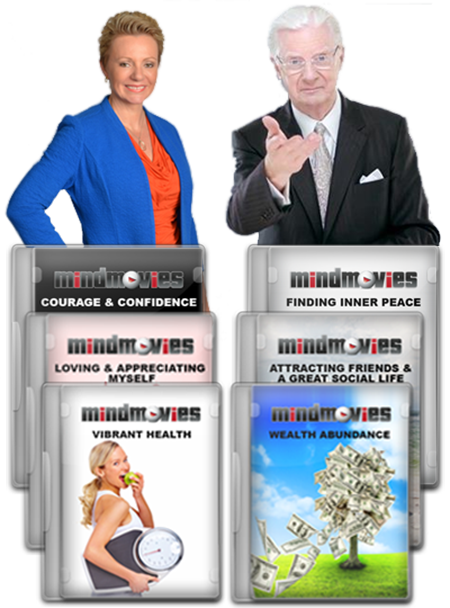
By far the best way though, in my opinion, is to combine images, words and sounds - especially music which reflects in some way the goals you want to reach.  Don't be put off by the apparent complexity of doing this, as it is a lot simpler than it sounds if you have the right tools.  There is a digital product which makes it as easy as falling off a log!  This is the "Digital Vision Board Creation Kit" by Mind Movies, the brainchild of my friend Natalie Ledwell.  You can get 6 completely free pre-made digital vision boards on attracting wealth, finding inner peace, having a great social life, becoming healthier, becoming more confident, and learning to love yourself.  Click on the image below to pick up your 6 free digital vision boards and to find out more about the Digital Vision Board Creation Kit you can use to create your own personalized digital vision boards.  When you get your 6 free pre-made Mind Movies, you'll also get instant access to this cool video series that tells you why and how Mind Movies work. The first video is with the legendary Law of Attraction Expert Bob Proctor and it's super interesting!


The problem with New Year's resolutions is that they can be difficult to keep. The sad fact that is by the end of January almost 90% of resolution have been forgotten about or broken. Don't let this happen to you this year.

When it comes to keeping your resolution you will be more successful if you set up a plan of action. As well as writing down what your goal or resolution is try using pictures so that you can visualize your goal.

To be truly successful with your resolution your best bet is to only select one resolution to work on at a time. Write your resolution out as a statement and attach a date to end.

For example "I lost 50 pounds by December 31."

As you can see we wrote this goal out as though you have completed it. This helps to reinforce your commitment to reaching your goal. It doesn't hurt to repeat this to yourself every morning or whenever you feel your motivation lacking.   That verbalization gives your subconscious cues about what you want to happen.

If your resolution is one that you have used before it is important to forgive yourself for not reaching it before. Don't think about what you did to fail last year. Instead focus on how you will succeed, and using a vision board is a great way to do this.

You want to fill your vision board with all your hopes and dreams for things that you desire once your resolution is completed. This could be a picture of a new car, a new home, or a new wardrobe of clothes for your skinny body.

On your vision board you can create milestone sections. These could be 2 or 3 month markers. With a digital vision board you could create one for, say, the next couple of months, then update it, archiving the old board so you can look back at earlier targets.  Evaluate your progress when these dates arrive and make any changes if necessary. If you aren't on track then look back on your vision board to see where you were 3 months ago. You will be reminded that you have made progress and this can help re-motivate you.

Concentrate on what you have achieved so far and celebrate your success. No matter how small a step you have taken it is important that you acknowledge it.

A reminder again about the free Digital Vision Boards you can get from my friend Natalie Ledwell.  Here is the link:

http://www.mindmovies.com/mm4/bobproctor.php?25923

Wednesday, 21 January 2015

You Are a Star!


You are a Star, a child of the Universe!

In 1969 Joni Mitchell wrote the song "Woodstock" which contains the following lines:

"We are stardust
Billion year old carbon
We are golden"

This is literally true.  You ARE made from star dust, as is everything else in this universe.  As a star cools and dies it throws off elements such as carbon, hydrogen and oxygen, and some of these eventually find their way into the material making up the atmosphere of a planet.  And so into all forms of life.  So you ARE literally made from star dust!  You ARE a child of the universe.

The image above is a photo of the Orion Nebula - a nursery where new stars are born.  Look on in wonder at the beauty of this Universe!

That is the end of my astrophysics lesson!

But now think about this more metaphysically.

Stars have a special psychological meaning for us.  They represent the ultimate goals for which we are aiming.  And we make wishes upon stars, and especially upon comets that are carrying star dust to its next destination.  So realize that you ARE a Star.  And if you are a Star, that means of course your goal is achievable, no matter what it may be.

You are a child of the Universe.  Whether you believe the ultimate creator is God, Allah, Yahweh, Brahma, or simply the Universe, you are its creation, its child.  I will continue to refer to the Universe here, but simply replace that word with whatever fits into your own belief system.  Just as you want the best for your children, so the Universe wants what is best for you.  It will do whatever is necessary to bring you what is best for you, provided this is not contrary to your free will.

There does seem to be a universal principle that nothing should interfere with free will.  And this is both a bane and a blessing.  The bane is that if you focus on the negatives, then that is what you will attract to you.  The Universe wants to bring you everything that is positive, but it will not contradict you, so if you are focused on the opposite, then the opposite is what you will get.  The blessing is that once you recognize you truly are a child of the Universe, and focus on the positives, the things you really want, then that is what the Universe will deliver to you.  Or rather, the Universe will so order things that as you work on achieving those goals the right people and the right resources will appear.

From now on, keep these two principles in mind.  You are a Star, and you will reach all your goals.  You are a child of the Universe, and as you work on reaching your goals the Universe will steer towards you whatever you need to reach them.

Wednesday, 14 January 2015

I will never make it because …


Did you know at least three presidents of the United States lost everything and went bankrupt before making their fortune again?  There may be more, as I am not an expert on American history, but I do know of Abraham Lincoln (bankrupt in 1883, eventually worth $18,400,000), Ulysses S Grant (bankrupt in 1881, eventually worth $95,100,000) and William McKinley (bankrupt in 1893, eventually worth $7,500,000).

There are plenty of other names you will probably recognize who have been through this experience of bankruptcy followed by financial success.  How about Walt Disney, for example?  Walt Disney had a dream, but in his early years not much else!  He was also considered rather a failure at school, had to repeat his second grade, and often dozed off in his lessons.  In 1921 Walt Disney went bankrupt.  By the time he died in 1966 he was worth $1,100,000,000, and he had also realized his dream of establishing a clean, wholesome entertainment park for children young and old – Disneyland.

Or how about Henry Heinz – the founder of the Heinz food company?  Like Disney, Heinz also had a dream.  He dreamed of creating safe and sanitary food, and of a nurturing and safe environment for his employees, and he achieved those dreams.  But not without going bust when he was 31!  When he died at age 74 Henry Heinz was worth $400,000,000.

Francis Ford Coppola, the director famous for both “Apocalypse Now” and the Godfather series of films, filed for bankruptcy three times in nine years – in 1983, 1990 and 1992.  Each time he arose from the flames of bankruptcy like a phoenix.  I have seen estimates of his net worth now varying between $25 million and $250 million.

Another “Ford” who went bankrupt and recovered is Henry Ford, the founder of the Ford car empire.  Ford was fired from his first job.  He filed for bankruptcy twice, but died with a net worth of $188,000,000,000.

If you do a little research you will find dozens of similar examples.  George Foreman, the rapper M C Hammer, Larry King, Bob Guccione (of Penthouse fame), the chocolate king Milton Hershey, the property magnate Donald Trump, Kim Bassinger, Burt Reynolds, the showman P T Barnum, even Buffalo Bill!  All went broke but recovered big time!

Usually the biggest obstacle that seems to prevent us achieving our dreams is the lack of money.  “I will never make it because I don’t have enough money!”  All of the above went bankrupt at least once but bounced back and made it – and so can you!

Or maybe you see a different obstacle.  “I will never make it because I am not clever enough!”  Albert Einstein was considered a very slow learner in his early childhood – so much so that his parents had to consult a doctor to check his mental abilities.  Richard Branson is dyslexic, but that didn’t stop him founding the Virgin empire.  Helen Keller contracted an illness that left her permanently blind and deaf from 19 months old, yet achieved her dreams of becoming a university graduate, a published author, a political activist and a lecturer.  Can you really say that whatever you think is holding you back is a more insurmountable obstacle than faced by Helen Keller?

No matter what obstacles you see, there is only one thing that can stop you reaching your goal – and that one thing is YOU!  Keep saying “I will never make it because …” and you WILL never make it.  Determine today to strike that phrase from your memory.  Replace it with “I WILL make it because …” and you, like all the above, will achieve your dream.

Wednesday, 7 January 2015

New Year Resolutions or Goals


Do you enjoy making New Year Resolutions, or actually the question should be do you keep your resolutions?  Did you know that 9 out of 10 people fail to keep their resolutions?  In fact I started a MOOC course on 5th January which had as its opening sentence "It’s January. The holiday is over, and you have already broken your New Year’s resolutions."  So what is the reason for this?

One of the main reasons that New Year's resolutions fail is simply because you are not totally committed to them.  Many people make so many resolutions that it is simply impossible to know where to start.  So instead of taking action it is much easier to give up on all of them.

The best way to get around this issue is to find something that you truly want to achieve with all of your heart.  This might be to lose 50 pounds to save $1,000 or to take up a new hobby.

Another way to look at your New Year's resolution is by shifting your perspective of it.  Resolutions are viewed as wishes and dreams by many people, and this is another reason why people aren't successful with them.

Instead you want to turn your resolution into a life goal.  Goals are more often specific things and desires that you want to achieve.  When you tell people what your goal is they are more likely to be supportive.  When you say that you just made a New Year's Resolution they often assume that once February hits your resolution will have disappeared.

Be very specific with your resolution and make it based on one thing.  This way you will find it much easier to stay on track and achieve your goals.  If your goal is a large one that includes a lifestyle change then break it down.

Break down a large goal into monthly, weekly and even daily goals.  By attaining a smaller goal you are less likely to lose your focus and you will be able to see that you are making progress.

Let's look at an example here.  Say you want to lose 50 pounds by next Christmas and make this your New Year's resolution.  If you leave it at that and start working on losing weight in January things are great.  What happens, though, is that you don't lose weight fast enough, and by February you have only lost 5 pounds.  Your immediate reaction is to give up because at that rate you won't reach your goal by the end of December.

You are not alone if you think like this, many people do and giving up acts as an excuse for not continuing.  A better scenario would be this:

Break up the 50 pounds into a yearly goal by setting a weekly goal to lose 1 pound.  This is much more realistic and attainable.  The chances are that you will have weeks where you lose more than 1 pound and this can help spur you on.  Plus it offers you a safety guard for those weeks when you don't lose any weight.

You must always remember that it is okay to get off track a little and not meet your goal.  For instance you may not lose weight but you may be exercising more and feeling great.  Think about how one balances out the other.  You are feeling great and this is a positive.  While not losing pounds is not what you want, you are still working on improving your lifestyle, which is a different plus!

This year try defining your resolutions as goals instead.  If you have made your resolutions, re-define them now.  Do this even if you have already failed to keep them.  If, like many, you didn’t even bother to set yourself any resolutions because you knew you wouldn’t keep them, set them now, but as goals.  Don’t worry about the fact that you didn’t set them for 1st January, as they are now goals, not resolutions.  Give yourself a time when you want to achieve them and tell your family and friends what your goals are.  You may find that they are more supportive than you expected.

Finally, if you would like some help from me in keeping your resolutions, simply send a blank e-mail to resolution@getresponse.net.  When you do this you will get an e-mail back asking you to confirm you wish to subscribe to my e-mail list.  If you confirm your subscription you will then receive 52 weekly supportive e-mails which will help keep you on track.  This is a free service, so why not take advantage of it!

Saturday, 27 December 2014

Celebrating the New Year


How do you celebrate New Year?  Do you have any particular rituals you follow, and do they have any real meaning for you?

There are many different rituals around the world, but there are some common themes underlying most of them.  Here are just a few examples:

In Panama, people burn effigies of well-known personalities.  The effigy represents the old year, and burning it drives away the evil of the old year, making way for the good of the New Year.

The concept of throwing away the old to make way for the new is taken one step further in Johannesburg, South Africa, where people throw old furniture and appliances out of their windows on New Year’s Eve.  If you are planning to spend New Year in Johannesburg, watch your head!

In Japan, workers have what they call a “bonenkai” party some time near the end of the year.  Literally, this means “forget the year party”.  The idea is to draw a line under what has happened during the year so you can start the New Year afresh.

In Denmark, people stand on a chair during the countdown to the New Year and leap from the chair as the clock strikes 12.

A rather different custom is the communal New Year kiss in St Mark’s Square, Venice.  What could be better than starting the New Year with love and friendship?

Finally, while most of the above is about forgetting and letting go of the old in order to start the new, “Auld Lang Syne” is all about remembering people with fondness.  “Auld Lang Syne” is an old Ayrshire folksong.  It was transcribed, but not originally written as many believe, by Rabbie Burns.  The custom of singing “Auld Lang Syne” at the stroke of midnight on New Year’s Eve was instituted by the Canadian bandleader Guy Lombardo.

Here are the words of the first verse and chorus of “Auld Lang Syne” (literal meaning “Old Long Since”):

Should auld acquaintance be forgot,
And never brought to mind?
Should auld acquaintance be forgot,
And auld lang syne!
For auld lang syne, my dear,
For auld lang syne.
We'll tak a cup o' kindness yet,
For auld lang syne.

The theme throughout most those rituals and customs is that we should clear away the clutter of the old year, all the things holding us back, and start the New Year afresh.  At the same time, we should remember those who have helped us on our way.

We don’t need a ritual to do this though.  Nor do we have to do it only on New Year’s Eve or New Year’s Day.  I think it should be a daily practice.  At the end of each day, reflect on what has happened.  Forgive anyone who has wronged you, and forgive yourself of all the wrong you have done, releasing all the bad which will otherwise hold you back.  Think of all the good that has happened and be thankful for it, and especially for all the people who have been good to you.  Now you can sleep easy and be ready to start the new day afresh.  Make this a daily habit, remembering and being thankful for the good and washing away the bad, and you will find it so much easier to make a fresh start and achieve whatever it is you want to achieve.


If you would like help with setting your Resolutions and goals for the New Year, or for any time, take a look at my “ResolutionRevolution” - http://beallican.com/gpdm/resolutionrevolution/info.htm.

Wednesday, 24 December 2014

Lessons from A Christmas Carol


If you are reading this the day it is published, then it is Christmas Eve, but whenever you are reading it the lessons are the same.  It was on Christmas Eve that Ebenezer Scrooge was visited by the Christmas Ghosts - the Ghost of Christmas Past, the Ghost of Christmas Present, and the Ghost of Christmas Yet to Come.

The Ghost of Christmas Past shows Scrooge key moments in his past where, had he taken the opportunity by the hand, he could have become a very different person.  Instead, he rejected all those opportunities to live a happy life and became a miserable miser instead.

The Ghost of Christmas Present appears to Scrooge in the form of Father Christmas.  Not the red, "Coca Cola" version, but the more traditional green robed Father Christmas.  A version beloved of all children who hang their stockings by the fireplace and expect him to come down a very narrow chimney, as Dickens' Ghost of Christmas Present has the essential ability to change his size to fit into any space, small or large.  This Ghost appears both as a jolly, partying Father Christmas carrying a symbol of peace on earth and goodwill toward men (and women!), and a stern, sarcastic chastiser who throws back at Scrooge his own selfish and unthinking comments about the poor and needy.  As he accompanies the Ghost of Christmas Present and sees the probable fate of his employee's disabled son, Tiny Tim, Scrooge seems to feel some remorse, asking whether Tim will really die.

The Ghost of Christmas Yet to Come never speaks, but just points, leaving Scrooge to draw his own conclusions.  The future he shows is grim.  Nobody mourns the death of Scrooge, in great contrast with the feelings of Bob Cratchitt and his family over the death of Bob's son, Tiny Tim.

We all know the outcome of these three visitations, of course.  Ebenezer Scrooge realizes that although he cannot change the past, if he changes what he does in the present he can certainly change the future.  And that is what he does, becoming a changed man spreading joy instead of misery, and receiving joy instead of misery back into his life.

There are very clear messages here we should all learn.

Regret the past, but don't dwell on it.  What has happened has happened, and we cannot change it.  But we must learn from it.  We must see what went wrong and not make the same mistakes over and over again.  Having taken the lesson we need from it, we must give ourselves closure.  Forgive ourselves for anything we may have done which we shouldn't have done.  Forgive others who may have done wrong to us.  This forgiveness both ways is vital.  We cannot allow Christmas Past forever to mar Christmas Present and Christmas Yet to Come!

Recognize that the future is Yet to Come.  Fear about the future is pointless.  It is not here yet and it can be changed.  Scrooge saw his own death unmourned and Tiny Tim dying prematurely, but neither actually happened, because Scrooge changed his actions in the present.

Remember that the present is all we have.  Don't let anyone take your present from you - it is God's gift to you, giving the word "present" a double meaning.  Nobody has the right to take that gift from you, or the ability to do so unless you yourself give that to them.  Live in the present, and live a full life now - not a live centered in regret about the past or worry about the future.  Do what you should do now, live the live you want to live now, be the person you want to be now, make the changes you want to make in yourself and all that is around you now.  Realize it is not too late to do this, but also that there is no time to lose.  You cannot sit there frozen, thinking you should have done this in the past, and you must not sit there thinking you can do it some time in the future.  Do it now!

Do this and your life and the lives of those around you will change radically and very much for the better, just as was the case for the hero of Charles Dickens' "A Christmas Carol".

Wednesday, 17 December 2014

Ceremonial Magic


If you came to this article looking for a magical ritual you can take away and use as is, I am afraid you will be sorely disappointed.  My purpose here is to give any non practising magicians just a little idea of what is involved.

Firstly, for my Christian and Muslim friends I want to dispel the notion that ceremonial magic is a form of idolatory, or even of black magic.  In its purest form it is neither, although the beliefs of some magicians may come close to what may be described as a form of idolatory, and a black magician may well use a distorted form of ceremonial magic.

Another word for ceremonial magic is "theurgy".  A ceremonial magician may also therefore be called a "theurgist".  I will use these terms for brevity.

A theurgist recognizes that there are many different powers "out there".  Some theurgists will view them as personal gods, and therefore would attract the ire of Christians and Muslims alike.  Others will view them much more as Jungian archetypes.  My own view is that the distinction is rather academic, although I would perhaps veer closer to the archetype than personal god view.

Those who have not studied theurgy in any depth may view these "powers" as nonsense, yet at the same time fear any invocation or evocation of them.  Ignorance usually results in fear, so I guess this should not really surprise me.  I am not going to attempt to "convert" those who refuse to believe.  I believe, and am happy to share my belief with those who wish to understand.  Is there any need for fear?  Well, if someone is going to try playing with forces they do not understand, yes there is.  Not because we are talking about devils or evil spirits, but for the same reason you should fear electricity if you are thinking of playing with some powerful electric black box when you know nothing about what is in it or how it works.  Electricity is not evil, but it can still kill you if you use it in the wrong way.

Another great misunderstanding about theurgy is the idea that a god, spirit, or other power is being harnessed purely for the purpose of achieving some material gain.  That should not be the aim of the ceremony at all, although it may nevertheless result in such a gain.

Returning to the Jungian concept, you could view the purpose of theurgy as an individuation process.  Creating a proper balance of all the powers that are there whether we like it or not, by working one by one with each power, integrating each of the archetypes properly into our true self.  The theurgist does this by focusing on one power so completely that this power materializes.  In a very real sense, the theurgist now "owns" this power.  Yet the power itself is something far greater than anyone who has not studied this subject could ever imagine.  Once one power has been properly invoked in this way, the theurgist moves onto the next, until eventually he or she has incorporated all the powers, or archetypes, and (using a term from another discipline) achieves samadhi.  Purists will probably criticize me for mixing terms from very different disciplines in this way, but to me it sums it up perfectly.

If you wanted to achieve individuation in the traditional psychotherapeutic manner this is not something you could achieve by yourself.  You would have to surrender yourself totally to another person.  It would also probably cost you a lot of money!  A theurgist does not surrender himself or herself to any other person.  Also, no money should change hands for the ceremonies themselves - although if you are going to do this properly (and it would be very dangerous to try doing it any other way!) you will need to invest a lot of time, energy, and probably money too assembing all the right magical implements.  When I undertook my first magical ceremony as a teenager I invested many long evenings searching for exactly the right branch to create my magic wand - and then had to time the cutting of the branch to the right astrological alignments.

If this brief introduction has ignited a spark of interest, I encourage you to study some of the masters (and mistresses) of the ancient theurgical art.  I suggest you go back to before the current fad of "new age" beliefs, as these have often corrupted the original pure teachings.  Search for works by Dion Fortune, Israel Regardie or Mouni Sadhu.

As a start, try "The Tree of Life" by Israel Regardie, "Theurgy" by Mouni Sadhu, and "The Training & Work of an Initiate" by Dion Fortune.  And when you have soaked up the wisdom in those three books, you will be ready to acquire the full training and rituals of the Golden Dawn.  Only then will you be ready to start on the great task of theurgy yourself.

PS, the above links are all US sources.  If you prefer UK sources, here are more links: